OpenAI’s New Constitution: Four Principles for the Era of Superintelligence
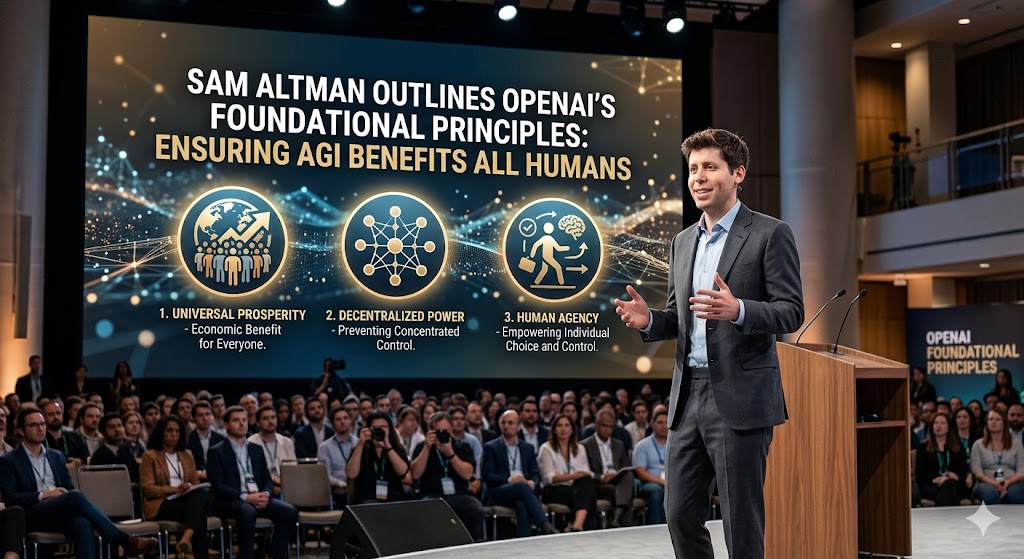
Sam Altman outlines OpenAI's foundational principles to ensure Artificial General Intelligence (AGI) remains a tool for universal prosperity, decentralized power, and human agency.
A Vision of Flourishing and Uncertainty
In a milestone statement released on April 26, 2026, Sam Altman detailed the core principles that will guide OpenAI's trajectory toward AGI. This technology, he argues, will dwarf previous industrial revolutions, but its success depends on a radical shift in how power and prosperity are distributed.
The Four Pillars of Responsibility
- Democratization: OpenAI commits to resisting the consolidation of power. Key decisions about AI's future should be made via democratic processes, ensuring access is not limited to a few elite labs.
- Empowerment: The goal is to maximize individual agency. AI should be a tool that allows every user to learn more, achieve dreams, and maintain autonomy within social boundaries.
- Universal Prosperity: By drastically lowering the cost of intelligence, OpenAI envisions a future where everyone has an excellent life. This will likely require governments to explore new economic models to share value creation.
- Resilience: AGI introduces existential risks, from cyberattacks to pathogens. OpenAI advocates for an iterative deployment strategy, allowing society to learn and adapt to each new capability layer.
The Shift Toward a Proactive Approach
This document signals a transition from OpenAI as a pure research entity to a global architect of socio-economic systems. By formalizing these principles, they are setting a standard for transparency and accountability that the industry has lacked. The emphasis on "democratic processes" suggests OpenAI is preparing for a future where its models are treated more like public utilities than private software. While uncertainties remain, these pillars provide a much-needed moral compass for the "black box" of frontier AI development.
Source: OpenAI Our Principles