OpenAI Unveils GPT-Rosalind: The Frontier Reasoning Model for Life Sciences
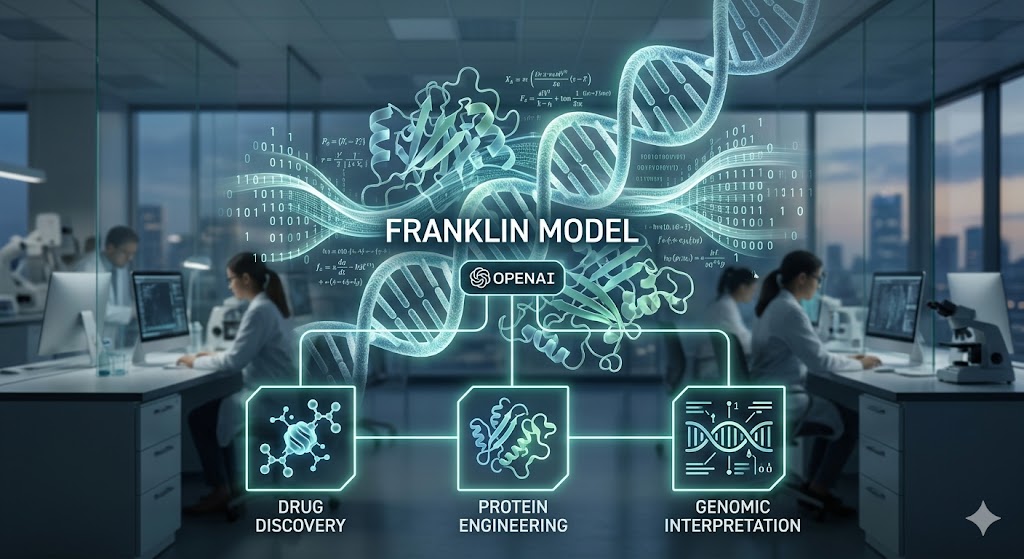
Named after DNA pioneer Rosalind Franklin, OpenAI's new domain-specific model is built to accelerate drug discovery, protein engineering, and genomic interpretation for research teams.
Breaking the General AI Mold
On April 16, 2026, OpenAI made a historic pivot from general-purpose AI to domain-specific dominance with the launch of GPT-Rosalind. Unlike earlier models designed for broad productivity, Rosalind is a specialized reasoning engine built specifically for biochemistry, genomics, and translational medicine.
Advanced Scientific Capabilities
GPT-Rosalind stands out by offering deep multi-step reasoning for complex biological workflows. It allows research teams to:
- Synthesize Evidence: Coordinate workflows across scientific tools, literature, and omics databases simultaneously.
- Hypothesis Generation: Design DNA and enzyme reagents for molecular cloning protocols with unprecedented precision.
- Drug-Target Interaction: Reason through binding affinity hypotheses and predict potential toxicity signals.
In benchmarks, GPT-Rosalind outperformed GPT-5 and industry rivals like Grok 4.2 and Gemini 3.1 Pro on the BixBench bioinformatics test, signaling a new standard for scientific AI.
The Life Sciences Ecosystem
Alongside the model, OpenAI released a Life Sciences Research Plugin for Codex. This tool connects researchers to over 50 public multi-omics databases and biology tools, including AlphaFold and BindingDB. Early partners like Amgen, Moderna, and Novo Nordisk are already integrating these tools to compress the decade-long drug discovery cycle.
The Shift Toward Proactive Defense
This move is a brilliant strategic verticalization. By gating access behind a "Trusted Access" program for vetted institutions, OpenAI manages the high stakes of biological R&D while building a massive moat in the pharmaceutical sector. This isn't just about a better chatbot; it's about owning the infrastructure of tomorrow's medicine. By open-sourcing the scientific plugins while keeping the core model gated, OpenAI effectively dictates the standards for how AI interacts with global biological data.
Source: OpenAI Introducing GPT-Rosalind