OpenAI Japan Teen Safety Blueprint — AI That Protects the Next Generation
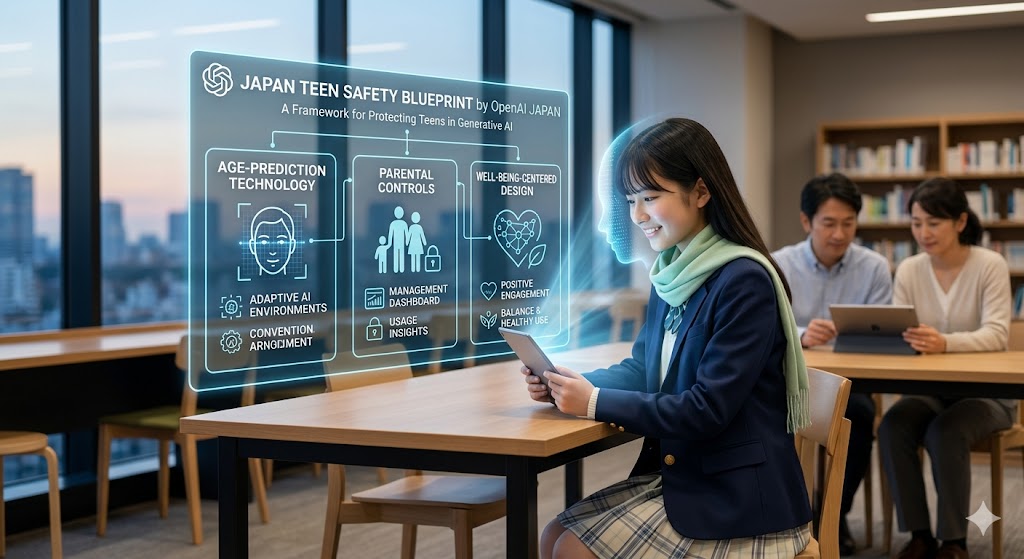
OpenAI Japan has launched the Japan Teen Safety Blueprint — a framework combining age-prediction technology, parental controls, and well-being-centered design to protect teens using generative AI.
The Context: A Generation Growing Up With AI
OpenAI Japan has announced the Japan Teen Safety Blueprint — a framework to help teens use generative AI safely and with confidence. In Japan, where a growing number of teens already use generative AI for learning, creativity, and everyday tasks, this work is especially important. As the first generation growing up alongside AI, ensuring these technologies are designed with their safety and well-being in mind from the outset is critical.
The blueprint isn't a reaction to crisis — it's a proactive stance. OpenAI frames it clearly: society has a window to approach AI differently from how it handled social media, where child safety was considered long after the technology had already been widely adopted. This time, the framework comes first.
The Invisible Age-Prediction System
Rather than asking users to upload ID, OpenAI has rolled out an age-prediction system that uses behavioral signals — writing style, topic choices, activity timing, and account metadata — to estimate whether a user is likely under 18. Crucially, when the system cannot confidently determine that someone is an adult, it defaults them into the teen experience. Assumed adult until proven otherwise is flipped to: protected by default.
For users classified as teens, ChatGPT will:
- Refuse to depict suicide or self-harm in any context, including fictional and creative scenarios
- Block graphic or immersive sexual and violent content, including any form of role-play
- Decline to describe, encourage, or instruct on dangerous viral challenges
- Refuse to help minors obtain dangerous or illegal substances
- Avoid playing the role of intimate friend or romantic companion
- Actively counter sycophancy — responses that become overly agreeable to foster emotional attachment
Parental Controls and Real-World Support
The blueprint introduces parental controls with proactive notifications, giving families meaningful visibility into how teens interact with AI. OpenAI has also strengthened in-product reminders that encourage breaks during extended use, alongside safeguards that detect potential self-harm signals and guide users to real-world resources — not just AI-generated responses.
These protections reflect a clear philosophy: AI should know when to step back and point to human support rather than attempting to fill that role itself.
Research-Based, Well-Being-Centered Design
The Japan blueprint was developed in collaboration with clinicians, researchers, educators, and child safety experts. OpenAI commits to continuing improvements across features like break reminders and pathways to real-world support, while advancing research into AI's impact on teen mental health and development.
The company also acknowledges a broader responsibility: protecting teens in the age of AI is not a task for any single platform. These types of protections should become a standard across the entire industry.
Why Japan, Why Now
Japan represents a particularly important market for this kind of framework. With high digital literacy among younger users and a cultural emphasis on academic performance, generative AI adoption among Japanese teens has accelerated quickly. The risks — exposure to misinformation, inappropriate content, and psychological strain — scale with adoption. The Japan Teen Safety Blueprint is OpenAI's answer to that acceleration.
OpenAI has committed to ongoing engagement with parents, educators, researchers, policymakers, and local communities through transparent dialogue. The message is consistent: the decisions made today will shape how teens use and are protected by this technology for years to come. OpenAI isn't waiting for regulation to set the standard — it's trying to set it first.
Source: https://openai.com/index/japan-teen-safety-blueprint/