OpenAI Turbocharges AI Agents with WebSocket Support
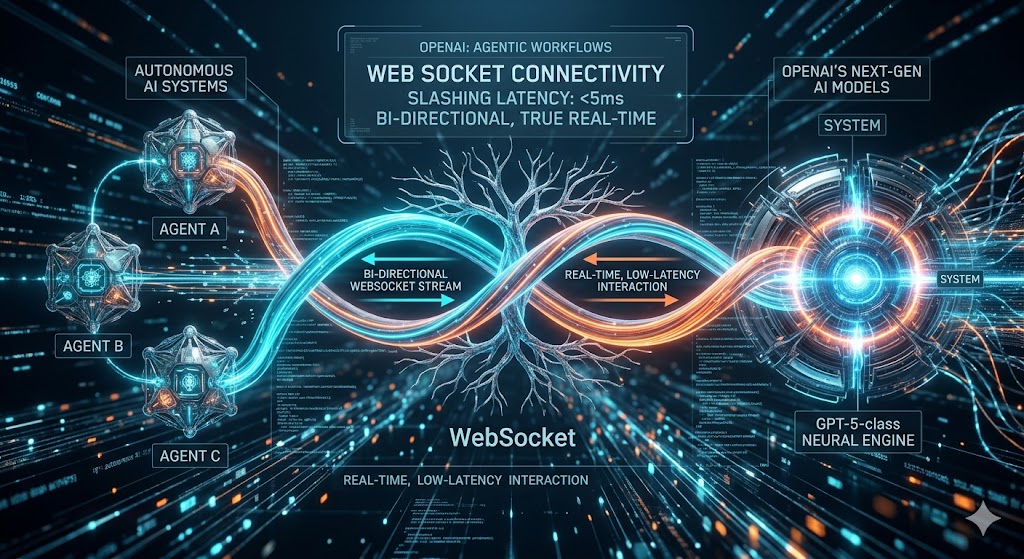
OpenAI introduces WebSocket connectivity for agentic workflows, slashing latency and enabling true bi-directional, real-time interaction for the next generation of autonomous AI systems.
Eliminating the Latency Bottleneck
In the pursuit of seamless AI interaction, OpenAI has reached a new milestone by integrating WebSocket support into its agentic workflows. Traditionally, developers relied on standard REST APIs, which incur significant overhead due to constant HTTP handshakes and polling. WebSockets change the paradigm by maintaining a persistent, open connection between the client and the model.
- Bi-directional Streaming: Agents can now send and receive data simultaneously, allowing for fluid "thinking" and "acting" phases.
- Reduced Overhead: By bypassing the standard request-response cycle, WebSockets significantly lower the cumulative latency in multi-step autonomous tasks.
- Stateful Interactivity: The persistent connection allows for more consistent context handling throughout the duration of a session.
The Shift Toward Proactive Action
This technical evolution signals a profound strategic pivot. By moving from high-latency batch processing to low-latency streaming, OpenAI is effectively positioning its models to act as "operating systems" for autonomous agents. This isn't just a faster way to chat; it is the infrastructure necessary for agents to operate in dynamic environments—such as real-time customer service, live trading, or interactive robotics—where every millisecond counts. This "infrastructure-first" approach builds a significant moat against competitors still tethered to traditional API structures.