The Next Phase of Enterprise AI: How OpenAI is Redefining the Future of Work
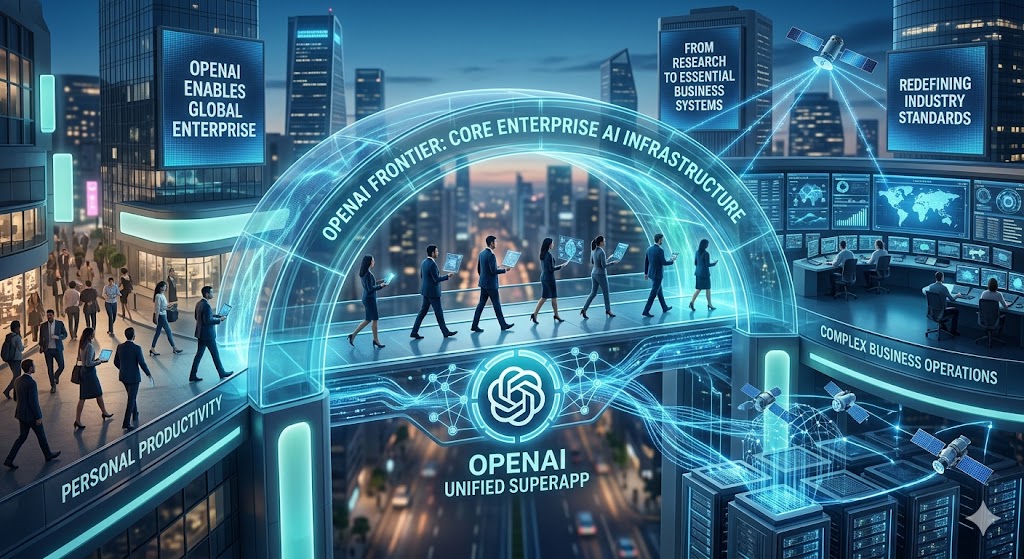
OpenAI is evolving from a research-led entity into the core infrastructure for enterprise AI. By introducing OpenAI Frontier and a unified AI superapp, the company is bridging the gap between personal productivity and complex business operations.
Beyond the Experimentation Phase
After meetting with hundreds of customers, OpenAI’s leadership has noted an unprecedented sense of urgency across industries. Enterprise adoption is no longer a "side project"; it now accounts for over 40% of OpenAI’s revenue and is on track to reach parity with consumer segments by the end of 2026. Models like GPT-5.4 and tools like Codex (which hit 3 million weekly users) are now performing substantive work for giants like Goldman Sachs and Phillips.
OpenAI Frontier: The Unified Intelligence Layer
The current challenge for businesses is the "chaos" of fragmented AI point solutions. OpenAI's response is OpenAI Frontier—an underlying intelligence layer designed to govern a company’s entire fleet of agents. Unlike embedded assistants, Frontier enables agents to operate across various internal systems and external data sources, maintaining context and continuity.
The Shift Toward Proactive Defense
A key technical milestone in this phase is the Stateful Runtime Environment, co-developed with AWS. This allows AI agents to remember prior work and maintain state across multi-step workflows, transforming them from simple chatbots into persistent AI coworkers. By bridging ChatGPT’s 900 million weekly users with enterprise-grade security and permissions, OpenAI is positioning its AI superapp as the primary experience where employees get things done.
Strategic Ecosystems
OpenAI is not building this future in isolation. Through Frontier Alliances with partners like McKinsey, BCG, Accenture, and Capgemini, alongside infrastructure giants like Databricks and Snowflake, they are embedding frontier intelligence directly into the data ecosystems enterprises already rely on.