OpenAI Unveils ChatGPT Images 2.0: The End of Diffusion and the Rise of Native Visual Reasoning
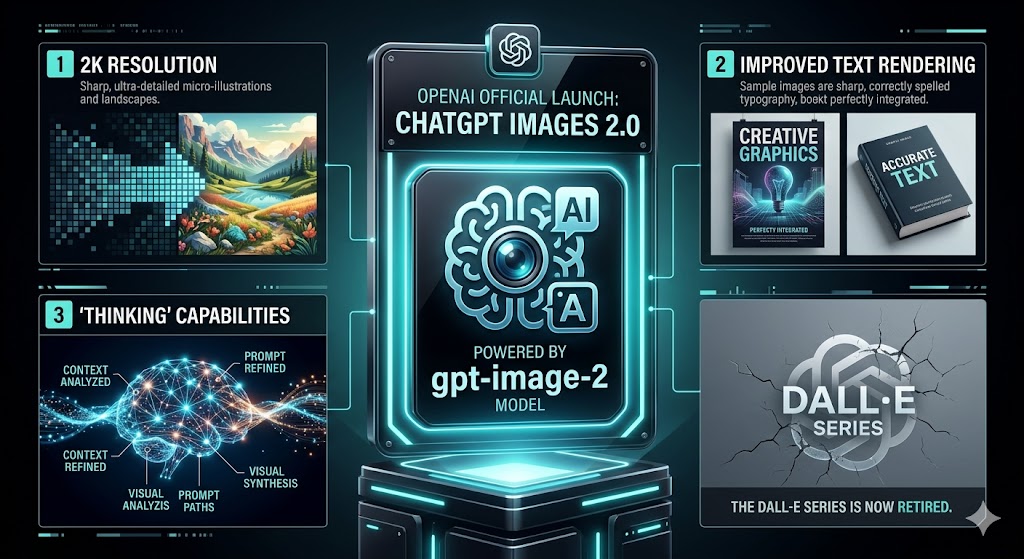
OpenAI officially launches ChatGPT Images 2.0, powered by the gpt-image-2 model. Featuring 2K resolution, improved text rendering, and 'thinking' capabilities, it marks the retirement of the DALL-E series.
The Dawn of Unified Multimodal Intelligence
On April 21, 2026, OpenAI fundamentally reshaped the landscape of AI creativity by introducing ChatGPT Images 2.0. Powered by the next-generation gpt-image-2 model, this update signifies a departure from standalone diffusion models like DALL-E, moving toward a unified foundation system where text and visual reasoning coexist natively.
- Images with Thinking: For the first time, users can choose "Thinking Mode" for images. The model plans, refines, and self-corrects its visual output before generating the final pixels, drastically reducing errors in human anatomy and complex physics.
- Layout-Aware Design: The system now natively understands graphic design principles, allowing for the generation of posters, magazine covers, and marketing assets with high-fidelity, multilingual text rendering.
- Temporal & Panel Consistency: gpt-image-2 can maintain character and background continuity across multiple panels, a breakthrough for comic creators and storyboard artists.
- 2K Professional Resolution: Outputs are now standard at 2K resolution with significantly higher dynamic range and realistic textures.
The Shift Toward Proactive Generation
The retirement of DALL-E 2 and DALL-E 3 on May 12, 2026, signals a strategic pivot in OpenAI’s infrastructure. By integrating image generation directly into the GPT architecture rather than calling an external tool, OpenAI has eliminated the "translation loss" that often occurred between a user's prompt and a separate diffusion model. This native visual reasoning allows ChatGPT to understand spatial relationships and brand conventions with a level of nuance previously unattainable. For enterprises, this means AI is moving from generating "interesting images" to producing "deliverable marketing assets" that require minimal human intervention.