The Sora Feed Philosophy — How OpenAI Tried to Build a Different Kind of Social App
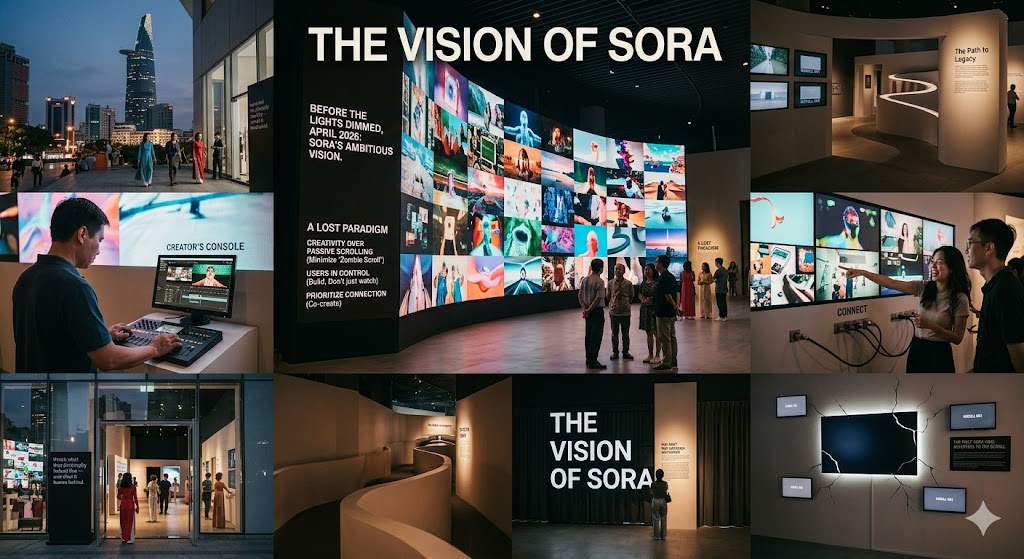
Before Sora was shut down in April 2026, OpenAI laid out an ambitious vision for its AI video feed: optimize for creativity over passive scrolling, put users in control, and prioritize connection. Here's what that philosophy looked like — and what it leaves behind.
A Feed Built With an Intention
In September 2025, alongside the launch of Sora 2 and its standalone iOS app, OpenAI published something unusual for a social product: a detailed written philosophy for how its content feed would work. Not a terms-of-service document, not a safety policy — a statement of design intent. The aim, as OpenAI put it, was simple: help people learn what's possible, and inspire them to create.
It's worth revisiting that philosophy now, not just as a historical record, but as a case study in what it looks like when a company tries to build a social feed with principles baked in from the start — rather than retrofitting them after the damage is done.
Four Principles, Stated Upfront
OpenAI organized the Sora feed around four core commitments:
- Optimize for creativity, not passive scrolling. The ranking algorithm was explicitly designed to favor active participation — content that invites remixing, collaboration, and creation — over content that simply maximizes watch time.
- Put users in control. The feed shipped with steerable ranking, letting users tell the algorithm what they were in the mood for. Parents could turn off feed personalization and control continuous scroll for teens via ChatGPT parental controls.
- Prioritize connection over virality. Content from people you know or are connected to was favored over globally viral content. OpenAI specifically designed Cameo flows — the feature that let users insert themselves or friends into Sora scenes — to strengthen real-world connections.
- Balance safety and creative freedom. Rather than adding moderation as an afterthought, guardrails were built into the generation layer itself. Because every post was generated within Sora, unsafe content could be blocked before it was ever made.
How Personalization Actually Worked
Sora's feed personalization drew on a layered set of signals: your posts, followed accounts, likes, comments, and remixes; your general location based on IP address; engagement signals from other users on your content; author-level data like follower counts; and safety signals to suppress flagged content. Optionally — and only if you enabled it — your ChatGPT conversation history could also inform recommendations, with a clear opt-out available in Data Controls.
The transparency here was deliberate. Most recommendation systems are black boxes by design. OpenAI chose to publish exactly what signals it was using — a small but meaningful gesture toward the kind of algorithmic accountability that most social platforms resist.
Safety Without Over-Censorship
The safety model was layered. Guardrails at the point of generation prevented disallowed content from being created in the first place. Feed-level filtering then removed or deprioritized anything harmful, unsafe, or age-inappropriate before it reached users. Teen accounts received additional protections: stricter generation limits per day, tighter permissions on the Characters feature, and filtered feeds by default.
OpenAI was also candid about the limits of automation: human review teams monitored reports and proactively checked feed activity to catch what automated systems missed. The company acknowledged it wouldn't get everything right on day one, and explicitly asked users to report content that violated its policies.
The Controversy It Couldn't Escape
Despite the thoughtful principles, Sora 2 attracted significant criticism. Copyright was the loudest flashpoint: the platform initially used copyrighted material in generated videos by default, requiring rights holders to actively opt out. The MPA chairman criticized the approach publicly. In December 2025, Walt Disney Company invested $1 billion in OpenAI specifically to unlock generation of more than 200 of its copyrighted characters on Sora 2.
Critics online dubbed the app "SlopTok" — a pointed reference to TikTok and the term "AI slop." Some industry observers questioned whether an endlessly scrolling AI-generated feed was a meaningful use of the technology, arguing the underlying video generation capability had far more valuable applications in professional creative and commercial contexts.
The End of Sora
On April 26, 2026, the Sora product was shut down. The API is planned to be discontinued on September 24, 2026, marking the end of the Sora brand entirely. The reasons behind the shutdown haven't been fully disclosed, but the combination of competitive pressure — with models like Seedance 2.0, Runway 4.5, and Kling 3.0 ranking higher on quality benchmarks — and the ongoing friction around copyright and social feed concerns likely contributed.
What Sora leaves behind isn't a product — it's a set of questions the industry is still working through: Can a social feed genuinely be designed to serve creativity over engagement? Can AI-generated content platforms coexist with intellectual property rights? And can a company that builds both the model and the moderation layer be trusted to police itself? OpenAI tried to answer those questions in public, in writing, before launch. That transparency didn't save Sora. But it set a standard worth remembering.