Running Codex Safely: OpenAI's Blueprint for Autonomous Coding Agents
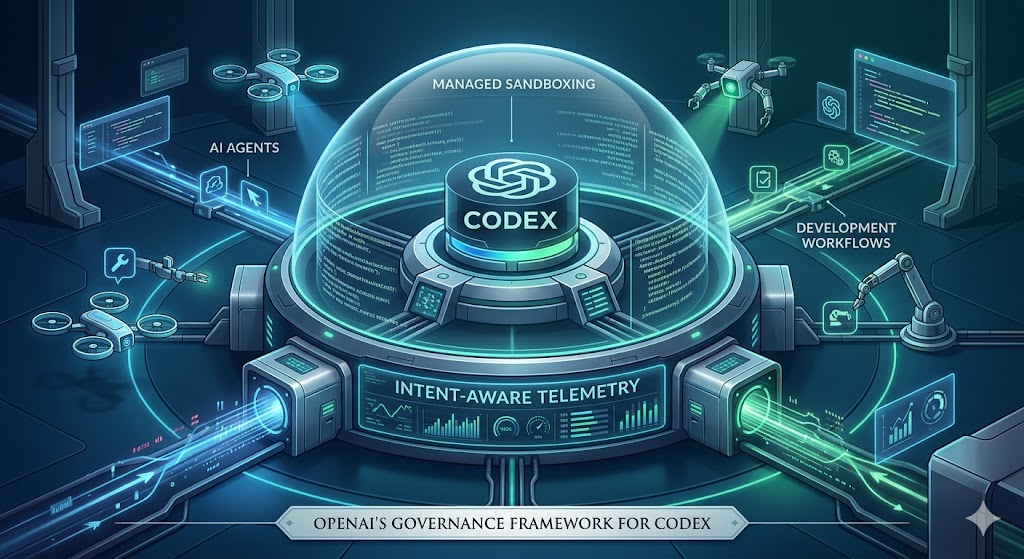
As AI agents become integral to development workflows, OpenAI has unveiled a comprehensive governance framework for Codex, focusing on intent-aware telemetry and managed sandboxing.
The Evolution of Autonomous Development
As AI systems move beyond chatbots to act as autonomous "agents," OpenAI has established a rigorous framework for Codex. The goal is to balance developer productivity with enterprise-grade security by keeping agents within clear technical boundaries while enabling frictionless low-risk actions.
- Sandboxing and Approvals: A dynamic boundary that defines where Codex can write, access networks, or interact with sensitive paths, supported by an Auto-review subagent.
- Managed Network Proxy: Eliminating open-ended outbound access by using managed policies and cached web fetches to prevent data exfiltration.
- Identity Pinning: Usage is strictly tied to ChatGPT Enterprise workspace controls, with credentials stored in secure OS keyrings.
The Shift Toward Proactive Defense
The most significant innovation in this framework is agent-native telemetry. Unlike traditional security logs that only record system events, Codex exports intent-aware data via OpenTelemetry. This allows security teams to understand not just what happened, but why the agent initiated an action. By utilizing an AI-powered triage agent, organizations can now distinguish between benign engineering mistakes and malicious activities at scale, creating a continuous security flywheel.
Source: Running Codex Safely at OpenAI