OpenAI Codex: Transforming from a Coding Assistant to a Universal Agent for Everything
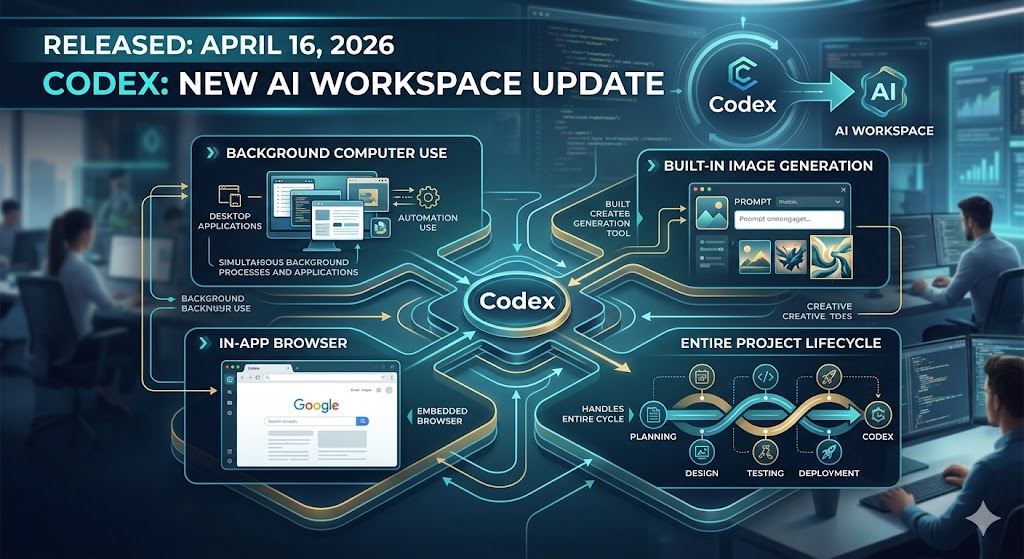
Released on April 16, 2026, the new Codex update introduces background computer use, an in-app browser, and built-in image generation, evolving Codex into a full-fledged AI workspace that handles the entire project lifecycle.
Codex for (Almost) Everything
In a major strategic expansion on April 16, 2026, OpenAI unveiled a massive update to Codex, its flagship tool for developers. No longer confined to mere code generation, the updated Codex aims to manage the broader workflow around software development and day-to-day digital tasks. With over 3 million weekly active users, Codex is transitioning from a "knowledge engine" into a "true agent" that works alongside the user.
Key Features of the 2026 Update
- Background Computer Use (Mac-first): Codex now operates with its own cursor, seeing the screen and interacting with desktop apps. It can perform tasks like updating Figma designs or running system tests in the background while the user continues working.
- Native In-app Browser: Developers can now render local dev servers or websites directly inside Codex, providing precise visual feedback and allowing the agent to iterate on frontend elements instantly.
- Multimodal Workflows: Powered by gpt-image-1.5, Codex includes native image generation for creating UI mockups, concept visuals, and game assets without leaving the workspace.
- Persistent Memory: The system now remembers habits, project context, and past actions, enabling smarter automation across multiple sessions.
The Shift Toward Proactive Defense
This update represents a fundamental shift in AI interaction—from stateless chat responses to stateful, agentic autonomy. By allowing Codex to interact directly with the operating system and external tools like Jira and GitLab, OpenAI is effectively eliminating the "context-switching tax" that plagues modern knowledge work. Furthermore, the introduction of a "Stateful Runtime" ensures that agents can pause, resume, and maintain complex workflow states across several days. This isn't just an improvement in coding; it is the blueprint for the future of general-purpose AI workspaces where the machine handles the execution and the human focuses on intent and architecture.
Source: OpenAI Codex Update