OpenAI's Model Spec: The Constitution for AI Behavior and Ethics
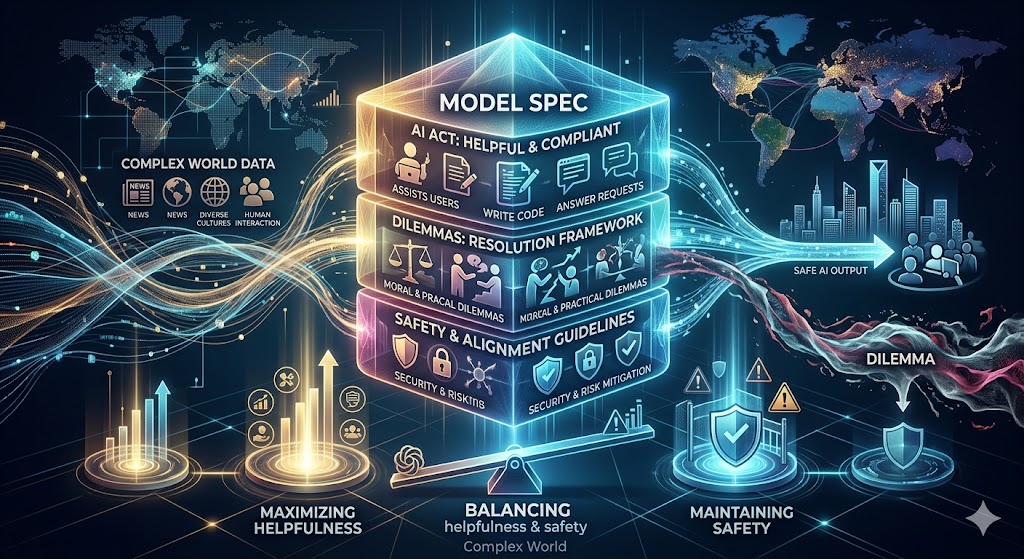
A deep dive into OpenAI's Model Spec framework—a comprehensive guide defining how AI should act, respond to dilemmas, and balance helpfulness with safety in a complex world.
The Quest for AI Alignment
In the rapidly evolving landscape of Artificial Intelligence, the question is no longer just "what can AI do," but "how should AI behave." OpenAI has addressed this by introducing the Model Spec—a deliberate, transparent document that serves as a behavioral blueprint for its models. This framework moves beyond simple filters toward a nuanced understanding of human values and operational boundaries.
The Three Pillars of Model Spec
The Model Spec is built on three foundational objectives that every response must strive to fulfill:
- Be Helpful: The AI must follow instructions accurately and provide the most relevant information while minimizing unnecessary verbosity.
- Respect the User: It should honor the user's intent within safety boundaries, maintaining a neutral tone unless a specific personality is requested.
- Protect the Ecosystem: The model must prioritize human safety, respect intellectual property, and avoid generating content that could undermine public trust or cause systemic harm.
Handling Conflict: The Nuance of Decision Making
What happens when being "helpful" conflicts with being "safe"? The Model Spec provides a hierarchy for decision-making. It instructs the model to be objective when dealing with sensitive or subjective topics, avoiding taking sides unless the user explicitly asks for a specific perspective. This "objective neutrality" is a significant departure from earlier models that often leaned toward popular consensus or refused to answer entirely.
Personal Perspective: Democratizing the "Soul" of the Machine
From my analysis, the Model Spec is OpenAI's most honest attempt yet at solving the Alignment Problem. By documenting these rules, they are essentially open-sourcing the "moral compass" of ChatGPT. However, a critical challenge remains: the document is written by a specific group of humans. While OpenAI invites public feedback, the ultimate power of interpretation still lies within their walls. The true test will be how this "constitution" evolves as AI gains more agency in our physical and digital lives.
Source: OpenAI Approach to Model Spec